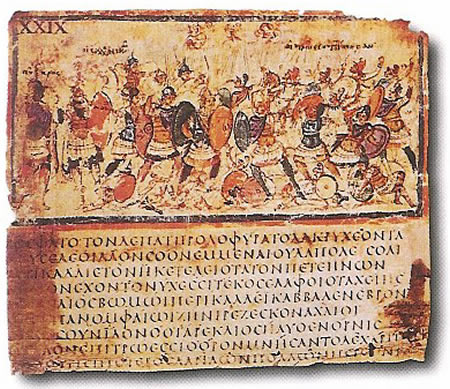
Achilles' Wrath: The True Focus of Homer's 15,693 Iliad Verses
For millennia, Homer's epic Iliad has captivated readers, painting vivid pictures of bronze-clad warriors, divine intervention, and the siege of the mighty city of Troy. Most people associate the Iliad with the entirety of the Trojan War, a decade-long conflict ignited by the abduction of Helen by Paris, leading to the eventual downfall of Troy thanks to the cunning Wooden Horse. However, a closer look at this foundational text reveals a fascinating truth: the vast majority of its 15,693 verses are not a sprawling chronicle of the entire war, nor do they culminate in Troy's destruction. Instead, Homer, the revered "first poet of the Western world," meticulously crafts a narrative almost exclusively centered on the incandescent rage of one man: Achilles.
This nuanced understanding challenges common perceptions and invites us to delve deeper into the masterwork, prompting the question: Aus insgesamt wie vielen Versen besteht Homers Epos Ilias, and what does this precise count tell us about its focus? The answer, a resounding 15,693 verses, serves as a testament to Homer's deliberate narrative scope, guiding us away from a broad historical overview and directly into the heart of a hero's profound emotional journey.
Beyond the Battlefields: Unpacking the Iliad's True Narrative Core
The popular imagination often conjures images of the Wooden Horse and the fall of Troy when thinking about Homer's Iliad. Yet, anyone who meticulously reads through the epic's twenty-four books will quickly discover that these climactic events are conspicuously absent. The truth is, the Iliad primarily chronicles a period of intense conflict lasting mere weeks during the tenth and final year of the Trojan War. From its very opening lines – "Sing, Goddess, the rage of Peleus' son Achilles" – the epic declares its theme. This wrath, ignited by Agamemnon's insult of seizing Achilles' war prize Briseis, drives the entire plot, influencing battles, alliances, and the fates of both Greeks and Trojans.
Of the 15,693 verses that comprise Homer's epic, every single one is dedicated to exploring the consequences of Achilles' fury: his withdrawal from battle, the devastating losses suffered by the Achaeans in his absence, the death of his beloved companion Patroclus, Achilles' subsequent return to vengeance, and his brutal slaying of the Trojan champion Hector. The narrative concludes not with the burning of Troy, but with the funeral games for Patroclus and the ransoming of Hector's body by King Priam, ending on a note of shared human grief and respect for the fallen. The destruction of Troy is merely hinted at through the death of its greatest defender, Hector, leaving the ultimate fate of the city to later myths and other epic poems.
The Myth of the "Trojan War Epic"
The misconception that the Iliad recounts the entirety of the Trojan War is deeply ingrained. This perhaps stems from the sheer scale and historical significance attributed to the conflict itself, especially after Heinrich Schliemann's archaeological discoveries at Hisarlik (modern-day Turkey) brought the ancient city of Troy from the realm of pure myth into tangible history. Schliemann's findings, revealing the fortified remnants of an ancient city, undeniably proved that a historical basis for the Trojan War existed.
However, Homer, believed to have lived between 800 and 700 BCE – some 400 years before the historian Herodotus – was not a direct eyewitness to the events he so vividly describes. He inherited and masterfully synthesized centuries of oral tradition, myths, and legends. His world view, nearly 2,800 years removed from our own, was one where gods actively intervened in human affairs, and fables were interwoven with historical memory. Therefore, the Iliad is best understood not as a journalistic account, but as a profound work of epic poetry. It uses the backdrop of a monumental war to explore universal themes of honor, fate, mortality, and the devastating impact of unchecked emotion, primarily through the lens of Achilles' monumental rage.
The Historical Echo: Troy's Existence and Economic Imperatives
While the Iliad focuses tightly on Achilles, the historical existence of Troy and the likely causes of the conflict that besieged it offer a compelling counterpoint to the epic's narrative choices. The fortified city of Troy, strategically positioned on the Dardanelles strait, was a veritable gateway between the Aegean and Black Sea regions. This location gave Troy unparalleled control over crucial trade routes, both maritime and overland, making it an economic powerhouse.
For the expansionist Mycenaean Greeks, a burgeoning maritime power themselves, Troy's dominance would have been a significant obstacle and an irresistible prize. The "abduction of Helen" by Paris, therefore, while a potent catalyst and a romantic narrative hook, was likely a convenient pretext for a much deeper, economically driven conflict. It was an excuse for the Greeks to dismantle Trojan control and secure vital trade pathways. The war, in this historical context, transitions from a lover's quarrel to a strategic geopolitical struggle for influence and wealth. This economic truth, while not the explicit focus of Homer's poem, likely underpins the historical reality that inspired the legends. It reminds us that even grand epic tales often have roots in very tangible, human ambitions.
Homer's Perspective: A Poet, Not a Historian
It is crucial to remember Homer's role. He was a poet, a storyteller, working within a tradition of epic verse. His aim was not to provide a factual, all-encompassing history of the Trojan War but to craft a compelling narrative, drawing on existing myths and legends. He chose to illuminate a specific, emotionally charged episode within that larger conflict. This decision to zero in on Achilles' wrath, allowing it to drive the entire plot of the 15,693 Iliad verses, is what gives the Iliad its intense focus and dramatic power.
His portrayal of gods, fables, and the heroic code reflects the cultural understanding of his era. He was interpreting past events through a contemporary lens, adding layers of meaning that resonated with his audience. Understanding this distinction between poetic license and historical documentation allows us to appreciate the Iliad for what it truly is: a masterpiece of narrative art that profoundly explores the human condition against a backdrop of war, rather than a comprehensive historical record of the entire conflict.
The Enduring Legacy of 15,693 Verses
The precise count of 15,693 verses in Homer's Iliad underscores the intentionality of his narrative choices. By narrowing the scope to Achilles' wrath, Homer crafted a work of unparalleled emotional depth and psychological insight. This focus allows for a detailed exploration of character, the nuances of honor and pride, the brutal realities of warfare, and the fleeting nature of life. The Iliad doesn't just describe events; it delves into the motivations and consequences of human action on both an individual and collective scale.
This concentrated narrative approach has profoundly influenced Western literature and art for nearly three millennia. From subsequent epics and tragedies to modern novels and films, the template of focusing on a critical moment or character arc within a larger historical event continues to resonate. The Iliad teaches us that even the grandest conflicts can be best understood through the specific, intense experiences of individuals. It stands as a timeless testament to the power of a single, powerful narrative thread to illuminate universal truths, proving that to truly understand the Trojan War, one must first understand the fiery soul of Achilles.
In conclusion, while the Trojan War undoubtedly forms the backdrop, the Iliad is, at its heart, the saga of Achilles' wrath. Comprising exactly 15,693 verses, this ancient Greek epic meticulously tracks the tumultuous journey of its central hero, revealing that the true focus of Homer was not the decade-long conflict itself, nor the ultimate destruction of Troy, but the profound human drama unfolding around a warrior's pride and rage. This understanding enriches our appreciation of Homer's genius and solidifies the Iliad's place as a foundational text that continues to challenge and inspire.