Beyond Troy's Fall: What 15,693 Iliad Verses Truly Reveal
Most people envision Homer's *Iliad* as the sweeping saga of the decade-long Trojan War, culminating in the iconic Wooden Horse and the dramatic downfall of Troy. This popular perception, however, only scratches the surface of what one of the Western world's foundational literary works truly encompasses. Far from chronicling the entire conflict, the epic poem, which comprises exactly
15,693 verses across its 24 books, focuses with intense precision on a very specific, albeit pivotal, segment of the war. Understanding this distinction is key to unlocking the deeper historical and cultural insights embedded within Homer's masterful narrative.
Homer's Echoes: Bridging Myth and History
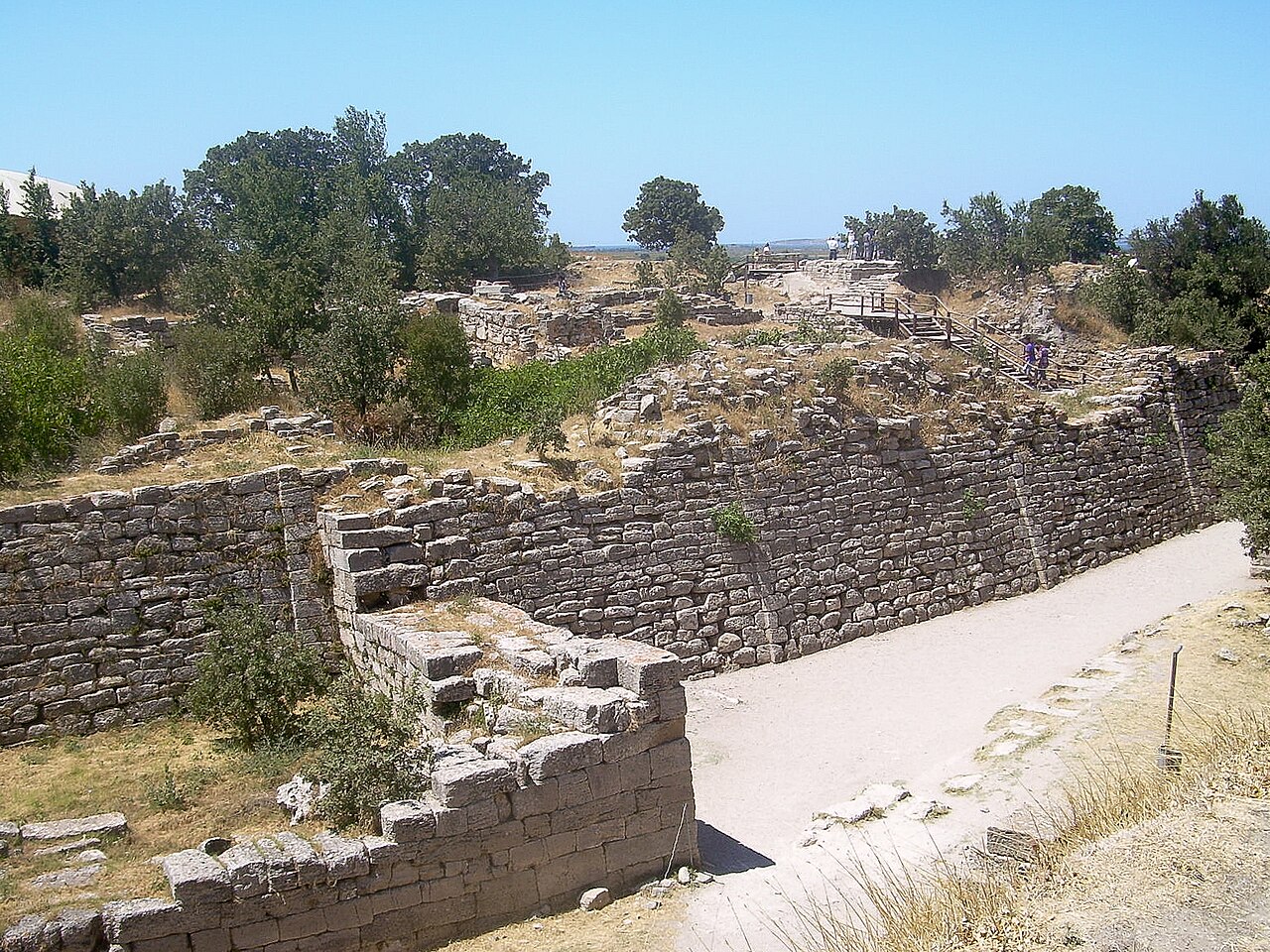
The journey to understanding the *Iliad* begins not with its verses, but with the fascinating interplay between myth and tangible history. For centuries, Troy was considered little more than a legendary city, a backdrop for heroic tales. This changed dramatically in the late 19th century when Heinrich Schliemann's excavations on the mound of Hisarlik, on the Aegean coast of Asia Minor (modern-day Turkey), unearthed the stone remnants of an ancient city. Schliemann's findings brought Homer's epic from the realm of ancient sagas into the light of verifiable history, asserting that the Trojan War likely had a historical basis.
Yet, as much as Schliemann's discovery confirmed a historical Troy, it simultaneously highlighted the interpretive lens through which Homer viewed past events. Homer, revered as the first poet of the Western world, is believed to have composed his works between 800 and 700 BC. This places him approximately 400 years before Herodotus, often called the "Father of History" for his analytical reporting. As such, Homer was not a contemporary witness to the events he recounted. Instead, he inherited and shaped tales passed down through generations, filtering them through the cultural and intellectual understanding of his own era, a time when gods and mythical beings were considered integral, active participants in human affairs. This context is crucial when we consider the scope and intent of the poem's
Homer's Iliad: Unveiling the 15,693 Verses of Ancient Epic.
The True Focus: Achilles' Wrath and the 15,693 Verses
When exploring Homer's epic poem and the question "Aus Insgesamt Wie Vielen Versen Besteht Homers Epos Ilias" (How many verses does Homer's epic Iliad consist of?), the answer—15,693 verses—is just the beginning. A closer examination of these verses reveals a narrative far more contained than commonly assumed. Despite popular belief, the *Iliad* does not tell the full story of the Trojan War, nor does it detail the famous Wooden Horse ruse or the ultimate destruction of Troy.
Instead, the core of the entire 15,693 verses, from beginning to end, is singularly dedicated to a specific theme: the wrath of Achilles (Achilleus). The narrative begins with Achilles' withdrawal from battle following a dispute with Agamemnon, the commander of the Greek forces, and the subsequent suffering of the Achaeans. It chronicles the tragic death of Achilles' beloved companion Patroclus at the hands of Hector, Achilles' vengeful return to battle, and his brutal slaying of Hector. The epic concludes not with Troy's fall, but with the funeral games for Patroclus and the ransoming of Hector's body by King Priam. The destruction of Troy can only be inferred, anticipated in the shadow of Hector's demise.
This laser-like focus on Achilles' anger and its devastating consequences is a deliberate narrative choice. It allows Homer to delve deep into themes of honor, fate, mortality, and the human cost of war, rather than simply offering a historical chronicle. This intense emotional and psychological exploration is what elevates the
Achilles' Wrath: The True Focus of Homer's 15,693 Iliad Verses into a timeless masterpiece.
Beyond Divine Intervention: The Geopolitical Roots of Conflict
While divine intervention and the abduction of Helen by Paris are vividly portrayed as catalysts for the Trojan War in the *Iliad*, historical analysis suggests a more pragmatic and often overlooked underlying truth: economic motivations. The tale of Helen's beauty and Paris's daring act might have served as the emotional trigger, but the seeds of conflict were likely sown in geopolitical strategy.
Troy was not just any city; it was a formidable fortress strategically positioned on the Dardanelles strait, separating Europe from Asia Minor. This location was paramount, as it allowed Troy to control all maritime and land trade between the Aegean Sea and the Black Sea. For the burgeoning Greek city-states, whose prosperity depended heavily on trade routes and access to resources, Troy's dominance would have been an intolerable impediment – a constant "thorn in their side."
*
Strategic Importance of Troy:
*
Gateway to the Black Sea: The Black Sea region was a crucial source of grain, timber, metals, and slaves for the ancient world. Control over the Dardanelles meant control over this vital trade.
*
Land Trade Hub: Troy also commanded significant land routes connecting different regions of Asia Minor.
*
Toll Collection: It is highly probable that Troy levied tolls on all passing ships and caravans, enriching itself at the expense of others, particularly the ambitious Greeks.
Therefore, while Homer's epic enthralls us with tales of gods and heroes, it's crucial to look beyond the mythological curtain. The "lost truth" about the Trojan War likely lies in a fiercely competitive economic landscape, where control over critical trade arteries could spark conflicts of immense scale. Helen's abduction provided a convenient *casus belli* for what may have been an inevitable clash for regional hegemony.
Homer's Legacy: A Lens on Humanity and History
The *Iliad*, with its 15,693 verses, stands as a monumental achievement, not merely for its literary prowess but for its enduring impact on Western thought. By understanding that Homer was not a factual chronicler but a poet weaving together generations of oral tradition, we gain a richer appreciation for his work. His epics are not history books in the modern sense; they are a profound exploration of the human condition, moral dilemmas, and the brutal realities of war, set against a backdrop of divine influence that reflected the ancient worldview.
Homer's narrative technique, focusing on the wrath of Achilles rather than the entire war, demonstrates the power of narrowing a narrative to amplify its emotional and philosophical resonance. It’s a testament to how specific events can illuminate universal themes. Furthermore, the underlying economic motives for the Trojan War, even if not explicitly stated by Homer, serve as a timeless reminder that grand narratives often have roots in practical, material interests – a pattern that continues to shape global conflicts today.
In conclusion, the
Homer's Iliad: Unveiling the 15,693 Verses of Ancient Epic offers far more than a simple war story. It provides a unique window into ancient Greek society, its values, its historical understanding, and the complex interplay of human ambition, divine will, and geopolitical realities. The brilliance of Homer lies not just in his ability to tell a captivating story, but in his profound insights into the human spirit, making the *Iliad* a text that continues to inspire, challenge, and reveal new truths centuries after its composition.