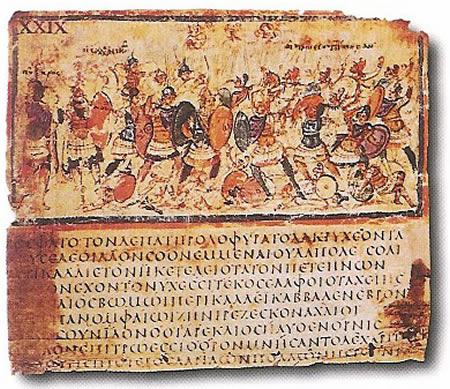
Homer's Iliad stands as a monumental pillar of Western literature, a captivating epic poem that has shaped cultures, inspired countless artists, and educated generations on the values and struggles of ancient heroes. While many associate it primarily with the grand narrative of the Trojan War, its true depth and precise focus are often misunderstood. A fundamental question for any admirer or student of classical literature often arises: Aus Insgesamt Wie Vielen Versen Besteht Homers Epos Ilias? In English, this translates to: "Of how many verses in total does Homer's epic Iliad consist?" The answer reveals the poem's impressive scale and meticulous structure: Homer's Iliad is comprised of a staggering 15,693 verses, meticulously arranged into 24 books or cantos.
This immense body of work offers far more than a simple chronicle of war; it is a profound exploration of human nature, destiny, and the divine. From its legendary origins to its enduring impact, the Iliad continues to invite readers to delve into its depths and discover the truths it unveils about a pivotal period in antiquity.
Decoding the Verses: The Sheer Scale of the Iliad
The number 15,693 is not just a statistic; it represents a vast, intricate tapestry woven with poetic skill and psychological insight. Each verse contributes to a narrative that, while epic in scope, is remarkably focused. When we ask, "Aus Insgesamt Wie Vielen Versen Besteht Homers Epos Ilias?", the response of 15,693 verses immediately signals the significant undertaking Homer (or the tradition he represents) accomplished.
- Epic Length: This extensive verse count places the Iliad among the longest and most ambitious poetic works of the ancient world. It's a testament to the oral traditions that preceded its written form, where bards would recite lengthy passages, often improvising within a structured framework.
- Structured Narrative: These 15,693 verses are traditionally divided into 24 books or "songs," a division often attributed to Alexandrian scholars. Each book typically covers a specific phase or theme within the broader narrative, allowing for a progression of events and character development that would be impossible in a shorter work.
- Poetic Detail: The sheer volume of verses allowed Homer to paint vivid pictures, describe intricate battle scenes, convey powerful speeches, and delve into the emotional states of his characters with unparalleled detail. Every simile, every epithet, every divine intervention adds layers to the story, immersing the reader in the world of heroes and gods.
Understanding the precise length of the Iliad helps us appreciate not only its literary craftsmanship but also its monumental cultural significance as a foundational text that demanded attention and sustained engagement from its ancient audiences, much as it does from readers today.
Beyond the Battlefield: What Homer Truly Narrates
A common misconception about the Iliad is that it chronicles the entirety of the ten-year Trojan War. While the war serves as its backdrop, the epic's 15,693 verses are remarkably concentrated on a much narrower timeframe and a singular, powerful theme. Homer’s genius lies in selecting a pivotal moment within a much larger conflict and exploring it with extraordinary depth.
The true heart of the Iliad is the "wrath of Achilles." From the very first lines, the poem announces its subject: the destructive rage of the greatest Achaean warrior, Achilles, and its devastating consequences for both Greeks and Trojans. The narrative unfolds over approximately 50 days in the tenth and final year of the Trojan War. During this intense period, Achilles withdraws from battle after a dispute with Agamemnon, leading to immense suffering for the Achaean forces. His return to battle, spurred by the death of his beloved companion Patroclus at the hands of Hector, becomes the central tragic arc.
Here’s what the Iliad, with its Achilles' Wrath: The True Focus of Homer's 15,693 Iliad Verses, meticulously details:
- The Quarrel: The initial conflict between Achilles and Agamemnon, leading to Achilles' withdrawal.
- Achaean Suffering: The ensuing battles where the Trojans gain the upper hand without Achilles.
- Patroclus' Death: The catalyst for Achilles' return to battle and his profound grief.
- Achilles' Vengeance: His brutal and relentless rampage, culminating in the killing of Hector.
- Hector's Funeral: The solemn rites for the Trojan hero, marking a temporary cessation of hostilities.
- Patroclus' Funeral Games: The poem famously concludes with these games, held in honor of Achilles' fallen friend, signifying a moment of reflection and a return to some semblance of order amidst the chaos.
Crucially, the Iliad does not depict the fall of Troy itself, the Trojan Horse, or the eventual destruction of the city. While the demise of Hector foreshadows Troy's inevitable doom, the epic draws its curtain before these events. This deliberate focus allows Homer to explore themes of honor, glory, grief, fate, and the brutal realities of war through the lens of individual human and divine actions, rather than attempting a comprehensive historical account.
Homer: The Voice Across Millennia
Who was Homer, the legendary poet behind these 15,693 verses that continue to resonate through the ages? The truth is, our knowledge of Homer is shrouded in the mists of antiquity. Herodotus, often considered the "father of history," writing centuries after Homer, estimated that the poet lived at least 400 years before his own time, placing Homer's activity somewhere between 800 and 700 BC. This means Homer was not a contemporary or eyewitness to the events of the Trojan War, which are believed to have occurred several centuries earlier, likely in the late Bronze Age.
This temporal distance is key to understanding the nature of the Iliad. Homer was not merely reporting facts; he was drawing upon a rich tradition of oral storytelling, myths, and heroic lays that had been passed down through generations. He was a master compiler and shaper of these narratives, weaving them into the coherent and magnificent epic we know today. His position as arguably the "first poet of the Western world" underscores his immense influence on subsequent literature and artistic expression.
Given the period in which Homer lived, the world he depicted was one where "gods and fabled creatures were still considered an essential component of life." The Olympian gods are not merely symbolic figures in the Iliad; they are active participants in the conflict, intervening on battlefields, influencing mortal decisions, and experiencing their own divine dramas. This integration of the divine reflects the cultural and spiritual worldview of ancient Greece, where the natural and supernatural realms were intimately intertwined. Understanding this context enriches the reading experience, allowing us to appreciate the epic as a reflection of its time, while still finding universal human truths within its timeless narrative.
The Real Stakes: Troy's Strategic Importance
While the myth of Helen's abduction by Paris provides the romantic spark for the Trojan War, historians and archaeologists increasingly point to deeper, more pragmatic motives behind the conflict. The discovery by Heinrich Schliemann of the ancient city's ruins on the hill of Hisarlik, on the Aegean coast of Asia Minor, firmly moved Troy from the realm of pure myth into verifiable history. This archaeological confirmation lends credence to the idea that the Trojan War, or at least a significant conflict involving Troy, likely occurred.
The "lost truth about Troy" lies in its formidable strategic position. Located on the Turkish side of the Dardanelles strait, Troy commanded a choke point between the Aegean Sea and the Black Sea. This gave the city immense control over trade routes, both by land and by sea, between Europe and Asia. For the burgeoning Mycenaean Greek kingdoms, this control would have been a significant "thorn in their side."
Consider these points regarding Troy's strategic value:
- Control of Maritime Trade: Any ship sailing to or from the Black Sea, a source of vital resources like grain, timber, and metals, would have to pass through the Dardanelles, directly under Troy's watchful eye. This allowed Troy to levy taxes, exact tolls, or even deny passage, thereby accumulating significant wealth and power.
- Land Route Dominance: Troy also sat astride crucial land routes connecting the Anatolian interior with the Aegean coast. This dual control made it an economic powerhouse and a formidable barrier to any regional hegemonic ambitions.
- Geopolitical Rivalry: For the expansionist Greek city-states, a wealthy and strategically located Troy represented not just an economic competitor but a geopolitical rival. The "abduction of Helen" could well have been the convenient casus belli, or pretext, for a war driven by economic and territorial expansionist desires.
Thus, Beyond Troy's Fall: What 15,693 Iliad Verses Truly Reveal about the underlying causes of the war adds a layer of sophisticated historical understanding to the epic. While Homer's narrative focuses on the human drama and divine interventions, the historical context strongly suggests that the conflict was rooted in the very real struggle for economic and political supremacy in the ancient Aegean.
Conclusion
Homer's Iliad, with its majestic 15,693 verses, remains an unparalleled achievement in literature. It is not merely a recounting of a historical war, but a profound artistic exploration of specific moments, characters, and emotions within that conflict. By focusing intensely on the wrath of Achilles and its tragic ramifications, Homer crafted an epic that delves deep into the human condition, grappling with themes of honor, loss, destiny, and the interplay between mortal will and divine intervention. While the exact biography of its author remains elusive, the poem's enduring legacy confirms Homer's genius as a monumental figure who synthesized centuries of oral tradition into a coherent and compelling narrative. Furthermore, understanding the strategic realities of ancient Troy enriches our appreciation for the complex interplay of myth, history, and economics that underpinned one of the most famous conflicts in human history. To engage with the Iliad is to engage with the very foundations of Western thought, revealing truths that resonate as powerfully today as they did nearly three millennia ago.